Commercial Waste Removal in Colindale for regular business collections and one-off clearances
Commercial waste removal in Colindale should be straightforward, dependable and suited to the way a workplace actually operates. We handle business waste removal for offices, shops, studios, managed premises and other commercial settings, with collection and clearance arranged around the type and volume of material that needs moving. The emphasis is on keeping waste streams organised, separating recyclable items where possible, and making sure the process stays practical from start to finish.
For many businesses, the right service is not just about taking waste away; it is about clear collection, sensible sorting and a reliable route for bulky or mixed items that cannot stay on site. Our work can include recurring collections and one-off clearances, depending on what your premises produce. If you are comparing options, you can also review pricing and quotes before deciding what to request.
Use this page to understand the main service and the kinds of jobs it can support. We also cover related clearance work for items such as office furniture, appliances and confidential materials, so you can choose the most suitable route for what needs removing. When you are ready, request a quotation with the details of your waste and preferred timing.
Business collections shaped around the waste your premises produce
Every commercial site generates a different mix of waste. Some premises mainly need regular general waste uplift, while others produce cardboard, archive material, packaging, redundant fittings or bulky items that build up after a refit. We can support these different needs with business waste removal that is organised around the actual waste stream rather than forcing everything into one broad approach. That makes it easier to keep work areas clear without unnecessary disruption.
Where the waste is suitable, it can be separated to improve recycling and reduce the amount of mixed material collected together. That may suit offices with old paperwork and packaging, retailers with display changes, or landlords dealing with the end of a tenancy. For those with confidential records, our confidential shredding page covers a related specialist option for secure document disposal.
Common commercial loads
Typical commercial collections may include:
- boxed office waste and packaging
- redundant stock or display material
- desks, chairs and storage units
- light fittings, fixtures and fittings
- mixed items from a clear-out or move
Office waste removal for desks, storage and day-to-day clear-outs

Office waste removal is often needed when a workspace is being reconfigured, downsized or cleared of unwanted items that have accumulated over time. We can remove desks, task chairs, pedestals, filing cabinets, shelving, reception furniture and other office contents that are no longer required. The focus is on clearing space efficiently while keeping the process orderly enough for occupied premises, shared buildings or managed offices.
Some office jobs are best handled as part of a wider workplace clear-out, while others involve a few bulky items that are awkward to move through corridors, lifts or stairwells. In either case, the collection plan needs to match access and building rules. If your waste includes furniture as well as mixed office items, the office clearance page gives a fuller picture of that related service.
Good preparation helps the collection run more smoothly. It is useful to know what is staying, what is going and whether anything needs separating before the visit. Where items are spread across rooms or floors, a simple note of the locations can make the process easier to organise. That does not need to be complicated: a clear list and a practical window for access are often enough to get started.
Furniture disposal and appliance removal for bulky commercial items
Many businesses need help removing heavy or awkward items that are not suitable for ordinary waste bins. Furniture disposal can cover chairs, tables, storage units, waiting room pieces and other bulky stock that has reached the end of its useful life. We also deal with certain appliances and fittings that need careful handling before they can leave the premises, especially where they are too large to move safely without planning.
When the items are being replaced, it is often best to align removal with deliveries or refurbishment work so that the old pieces are cleared at the right time. This can help prevent blocked walkways and keep back-of-house areas usable. If your job is mainly about removing specific household-style items from a business or mixed property, furniture disposal is a relevant related page.
We can also support the removal of white goods and similar appliances where the material and access allow it. Those jobs may call for extra care because of size, weight or internal components. For example, a fridge left in a cramped storage area may need a very different approach from a light office cabinet. The exact method depends on what the item is, where it sits and how it needs to be moved out.
Waste from refurbishments, strip-outs and property changes
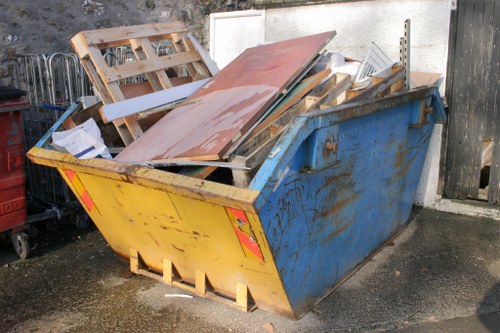
Commercial waste removal is often needed during refurbishment, fit-out or maintenance work when old fittings, packaging and dismantled fixtures start to accumulate. We can collect material from a range of project stages, including preliminary strip-out work, mid-project clearing and the final sweep before handover. That may involve mixed waste rather than one tidy category, so it helps to plan the collection around how the site is being used.
Builders’ and trade waste can include timber, packaging, broken fixtures, offcuts and other material left behind by contractors or in-house teams. For larger project loads, it is sensible to identify whether the waste is clean, mixed or unusually heavy before arranging removal. The builders waste clearance page is a useful related destination if the job centres on worksite debris rather than general business waste.
We do not treat every project as the same. A small office refresh, a retail refit and a landlord strip-out can all create different waste patterns and access issues. One job may be mostly cardboard and packaging; another may be full of bulky fittings that need a more considered lift-out. The aim is to match the collection to the work already happening on site so that the removal process does not create extra disruption.
Household-style clearances for mixed premises and managed properties

Some commercial premises also need clearance services that are closer to domestic work in the type of items involved. That can apply to managed properties, smaller flats above shops, rental changes or premises where storage areas have filled with mixed contents over time. In those situations, a broader clearance can be more suitable than a simple waste uplift because the job may include furniture, boxes, loose items and other varied material.
Where the property needs a fuller internal clear-out, related pages such as flat clearance and home clearance may help explain the way mixed contents are handled. Those services are useful when waste removal overlaps with more general clearance work, especially if rooms contain both reusable and unwanted items. The right choice depends on how much needs moving and how the contents are arranged.
Before arranging collection, it helps to separate any items that must remain on site, note anything unusually heavy or fragile, and think about access routes such as lifts, loading bays or narrow stairwells. If you are unsure what to include in the job, a short description is usually enough to start. Send the item list first, then use the quotation stage to confirm the practical details.
About Colindale
Colindale is an area in the London Borough of Barnet in north-west London, known for a landscape that combines long-established residential streets, post-war development and changing commercial uses. It sits along the A5 corridor, historically a significant route between central London and the north-west, and its modern character reflects both movement and settlement over time. The area is closely associated with the former RAF station at Hendon and, more recently, with large-scale regeneration and redevelopment that has reshaped parts of the district. This layered history gives Colindale a varied built environment rather than a single uniform centre.
One of the area’s best-known institutions is the Royal Air Force Museum London, which occupies part of the historic aerodrome site and displays aircraft and aviation history in a purpose-built setting. Nearby, the Colindale Avenue and Grahame Park areas show different phases of twentieth-century housing and estate planning, while current redevelopment has introduced newer blocks and public spaces. The locality also has connections with the former Newspaper Library and with archival and research activity, reflecting a background that extends beyond simple suburban growth. Green spaces in the wider district add further variety, with parks and open areas helping to break up the urban grain.
Colindale’s architecture is shaped by transport corridors, housing estates and redevelopment sites, with the built form changing noticeably from one street to the next. That contrast between older roads, modern apartment buildings and institutional sites is part of its identity. The area remains linked to movement and change, yet it also has recognisable local anchors such as places of worship, schools, retail parades and civic facilities. Taken together, these elements make Colindale a distinctive north London district with a practical, evolving character and a strong connection to the wider story of Barnet and the capital.
Office, archive and specialist waste streams handled with care
Not every commercial clearance is the same. Some premises generate waste that needs careful handling because of the type of material involved, the way it is stored, or the sensitivity of the items being removed. That can include office papers, archived files, mixed stock, obsolete fittings or equipment that should not simply be dragged out without planning. A thoughtful service keeps the site workable while the clearance is taking place.
For businesses dealing with papers and secure records, it may be sensible to separate general waste from confidential material before collection. In some settings, unwanted storage also includes old fridges, display units or specialist fixtures that need their own route out of the building. If the job involves unsuitable items or special handling, the relevant related page such as hazardous waste disposal can help indicate the right category before you ask for a quotation.
Useful decisions at this stage tend to be practical rather than complicated. Think about what is being removed, whether any contents remain inside cabinets or cupboards, and whether the job needs to be done in stages. A simple separation of materials can make it easier to identify the correct service and avoid paying for more work than is necessary. That is especially important where the premises contain mixed waste from several departments or activities.
Clearance for garages, lofts and storage areas linked to business premises
Commercial waste removal is sometimes needed in storage areas rather than in the main working rooms. Garages, basements, lofts and back rooms can become hold-all spaces for old furniture, packaging, broken equipment and spare stock. Clearing these areas can make a noticeable difference to how a premises functions, particularly where storage has been left unmanaged for a long time or is blocking practical access.
These jobs often involve mixed contents rather than a single item type, so the collection needs to be shaped around the space itself. Some items can be stacked and moved in an orderly way; others require careful handling because of awkward size or access. If your premises have space that needs emptying before refurbishment or reorganisation, related pages such as garage clearance and loft clearance can help you compare the type of work involved.
It is worth deciding in advance whether any contents are to be kept, recycled or removed in full. That small bit of planning can save time when the clearance begins, especially if several people use the same storage area. Where access is restricted, a note on entry points and parking arrangements can also make the collection easier to set up. Clarity at the start usually means a cleaner outcome at the end.
How quotations are prepared for commercial waste removal
Quotation requests work best when they describe the waste, the setting and the kind of access involved. For commercial waste removal in Colindale, that may mean saying whether the job is a one-off clearance or a repeat collection, whether there are bulky items, and whether the material is mixed or separate. A useful quotation is based on the practical details, not on guesswork, so giving a clear outline helps the process move quickly.
It can also help to mention if items are upstairs, in a basement, in a locked area or spread across more than one room. If there are loading restrictions, permit issues or narrow access routes, those facts are useful as well. For a straightforward next step, you can contact us with the key details and ask for a quotation based on the waste you need removed.
The final choice usually comes down to what needs moving and how the site is set up. If you want business waste removed without turning the day into a disruption, it is sensible to keep the request focused on the actual load and the access conditions. That gives room to plan the work properly and makes it easier to match the service to the job rather than the other way round.
Recycling, disposal and the practical route for mixed materials
Commercial waste removal should not be limited to simply taking items away. A good service also considers how the material is handled afterwards, particularly where there is a chance to separate recyclable items from general waste. Cardboard, metal, some furniture components and selected office materials may need different treatment from general rubbish, so the load is best assessed before it leaves the premises.
That is why it helps to think about the material in categories. Some jobs contain clean recyclable items; others include mixed waste that has to be processed differently. If you are dealing with a wider clear-out and want to understand how items are directed after collection, the recycling and sustainability page provides a related overview. It can be useful background when choosing the right route for your material.
Practical preparation does not need to be elaborate. A list of the main items, a note of the location, and any details about building access are often enough to support a quotation. If there are special rules for the site, such as restricted loading times or a concierge desk, that should be mentioned as well. The better the outline, the easier it is to arrange a collection that suits the premises and the waste.